
Town of Colonie City Directory Holdings
Town of Colonie city directory research starts with a scope check. Albany Public Library's city-directory guide reports an almost-complete Albany run from 1813 to the present, but it separately names Colonie and other suburban titles. That distinction matters. An Albany City entry may be valuable for a person who lived in the city, while a Town of Colonie address may belong in a suburban directory, a telephone book, or a county collection instead. Record the title, publication year, and the place named on its cover before treating an entry as local evidence.
| Collection | Years | Where Held | Access |
|---|---|---|---|
| Albany city directories | Nearly complete, 1813-present | Albany Public Library, Hall of Records, and New York State Library | Browse print or microfilm, with a digitized subset through library access |
| APL microfilm group | 1950-1979; 1981; 1983; 1985-86; 1988-94; 1996-2014 | Washington Avenue Branch microfilm room | Browse while the branch is open |
| Albany Suburban directories | 1916, 1926, and 1936 | New York State Library Microforms | On-site film; confirm the title and municipality before relying on it |
| Albany telephone books | 1903; 1914-30/31; 1935/36-40/41; 1942-51/52; 1953-60/61 | New York State Library Microforms | Address and telephone lead, not proof of residence |
| County and town directories | Municipality and year vary | Albany County Hall of Records and local libraries | Ask staff for a town directory by municipality and year |
The known collection record has limits. A complete Colonie publisher-and-year inventory, and a complete named Colonie reverse-directory run, were not located in the official guides. That is a reason to ask for address-keyed volumes at APL, the Hall, or NYSL rather than promise that every year can be searched online.
Colonie Volume Scope
City directories describe a publishing area, not an automatic county-wide roster. Colonie sits in Albany County and includes village layers, while historic records may use Albany, Latham, Loudonville, Menands, or another postal label. Preserve the printed place name as written, then make a separate note of the modern town or parcel location. This protects a search from joining two unrelated entries simply because the current geography feels close.
When a person or address is missing, test spelling variants, initials, widow notation, an older street form, and a suburban title. A negative result can also mean that the household was not listed, the volume did not cover the postal place, or the required year has a collection gap. For current, parcel-keyed research after a historical address is found, the Town of Colonie street directory follows the separate modern property-record trail.
Town of Colonie City Directory Access
Albany Public Library's Local History Room holds manuscripts, photographs, newspapers, directories, and digital collections. Its published directory guide says the room can retrieve up to ten items a day when the room is closed, while the Washington Avenue Branch microfilm room provides a browse route for listed years. Local-history appointments are available, and the room lists localhistory@albanypubliclibrary.org and (518) 427-4300 x0376 for contact.
Library staff and the original shelf or roll remain important because an online search result can be only one page rather than a whole volume. The APL guide reports 86 digitized years in Ancestry Library Edition. Permitted home access is available to qualifying branch patrons, while a search begins by choosing the publication and the exact Albany title. Individual pages can be downloaded, but the whole volume is not supplied as one download.
The Albany County Hall of Records is the fallback for county census, naturalizations, directories, and early records when a digital result ends. It accepts in-person and mail research. Mail research is listed at $20 per hour; onsite copies are 50 cents per page, and written certification is $4. Ask staff to separate City of Albany holdings from county-wide or town-directory material.
Reading Town of Colonie City Directory Entries
A city directory entry is evidence from a dated publication, not a complete profile. The official collection guides support recording the printed name, household marker, occupation or business, street address, status notation when present, cross-references, page, year, and scan or roll identifier. Do not assume one publisher's marks apply to another volume. A street address often creates the best bridge to a later parcel, but an advertisement or business listing is not the same as a household entry.
| Headword | Copy the surname, given name, initials, and any spelling variant exactly as printed. |
|---|---|
| Household marker | Note a spouse in parentheses, widow or widower notation, or another relationship abbreviation when shown. |
| Occupation or business | Record the trade or affiliation as printed, without treating it as proof of a current role. |
| Street address | Keep the house number and street form. It may be the most stable bridge to a parcel. |
| Status mark | Copy an owner, renter, boarding, or similar mark only after checking that volume's key. |
| Volume evidence | Save the title, year, page, imprint, scope, and scan or microfilm identifier. |
- Criss-cross directory
- An address-ordered directory section, when a publisher included one. Its availability must be checked by year rather than assumed.
- Householder index
- An alphabetical finding aid that can point to a household entry, but it does not replace reading the original page.
- Abbreviation key
- The volume's explanation of its own short forms. Photograph or copy it before interpreting a status mark.
Search the address as well as the surname. A name can change through initials, marriage, widow notation, or a simple printing choice, while a street guide may preserve the address. Conversely, an address can change even when the household has not, so retain each exact street spelling rather than silently modernizing it.
Colonie Archive Leads
Directory years work best beside local newspapers, yearbooks, cemeteries, and naturalization records. Sanford Town Library and the Town Historian created the digitized Colonie NY Cemetery Collection from smaller family cemeteries, with original material dating about 1700 to 1950. The Historical Society of the Town of Colonie is a local-history lead, while Albany Public Library provides newspaper and yearbook routes. Town cardholders can use NewsBank titles that include the Times Union and Daily Gazette.
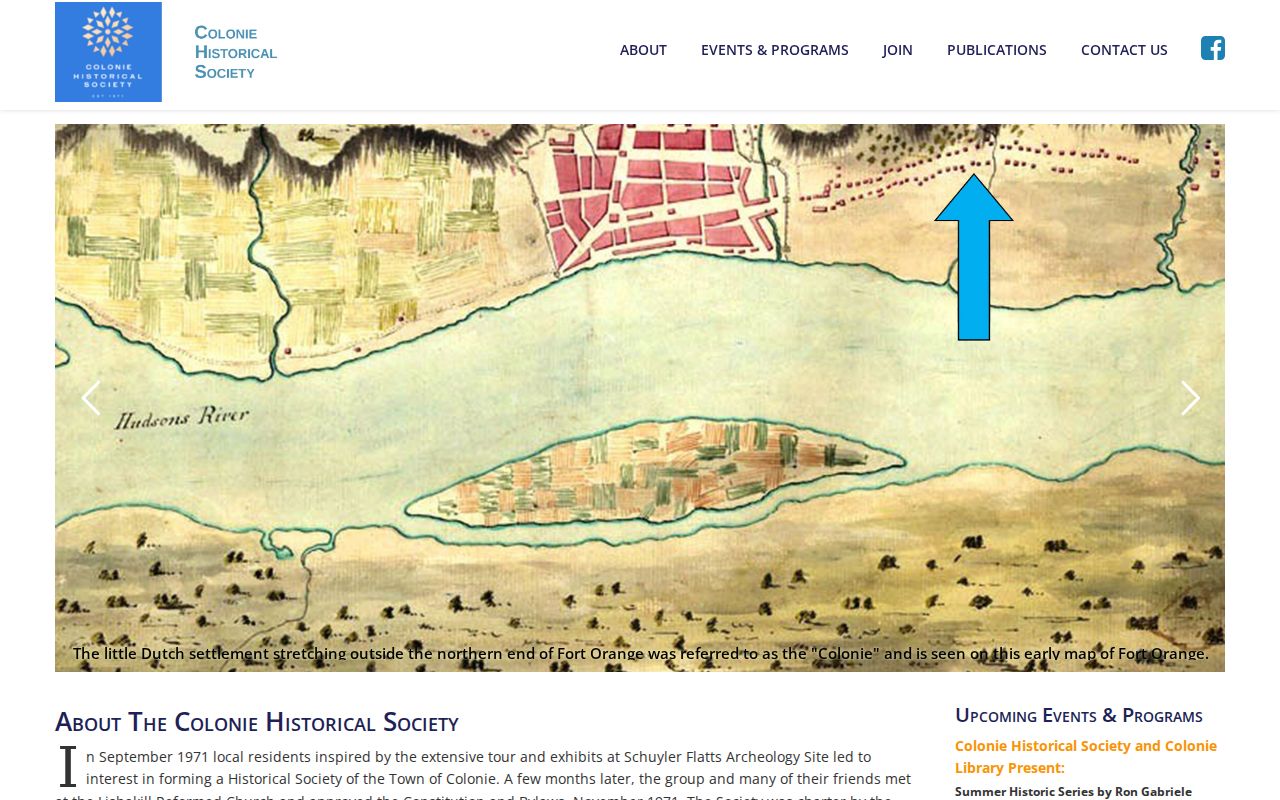
The Historical Society of the Town of Colonie and the Town Historian add place context, cemetery work, and local-history leads. The present Historical Society page was blocked during the research inspection, so no claim is made about a current online directory catalog. The verified practical route is to use the society and Historian as an archival lead, then confirm the access rules for the particular collection.
For an obituary search, combine a surname with a road, cemetery, funeral home, Latham, Loudonville, Newtonville, Roessleville, Verdoy, or Boght. Check the paper's date, page, and original image. OCR can locate a lead, but it can miss a name or misread an old typeface.
Tracing Town of Colonie City Directories
Build a household trail one dated volume at a time. A census captures a point in time, while a directory is a publication snapshot that may have been compiled earlier. The difference matters when a household moved. Pairing the nearest directory and census creates a useful check without treating either source as a full account of a family.
- Start with a known surname or address and copy the full entry, its year, page, street spelling, occupation, and household notation.
- Check the next available volume by name, then run the address through a street guide or criss-cross section when the volume has one.
- Pair the dated entry with the nearest federal or New York State census, keeping the census date separate from the publication date.
- Use a newspaper, cemetery record, probate file, or naturalization petition to test a move, death, relationship, or changed spelling.
- When the property record is needed, follow the address through the GIS and deed path instead of assuming a directory label proves legal ownership.
A disappearance is not a conclusion. The person may have moved, died, been omitted, appeared under a different spelling, or fallen into a gap in the relevant suburban run. A modern confirmation belongs in an independent record. The Town of Colonie resident lookup is the separate route for checking a present-day individual through the limited official records that apply.
1880 Fire and Surviving Records
Albany City Hall's 1880 fire destroyed many valuable records. Later county and city holdings were centralized or recovered, which helps explain why a local trail can surface in a Hall of Records finding aid rather than a simple town portal. An online absence is therefore not proof that a past event or household never existed.
| Year or period | Directory and records milestone |
|---|---|
| 1813-present | APL describes an almost-complete Albany city-directory run, with separate suburban-title questions for a Colonie address. |
| 1830-1994 | Hall of Records notes Albany City directories for this span, a city-specific holding that needs scope checking. |
| 1980-present | SearchIQS is the practical online land-record boundary, while older material remains a Hall route. |
Recent county scanning adds access in stages, not all at once. Keep the directory shelf, microfilm, and staff-research channels available when a search stops at a digital cutover.
Note: The precise year a specific Colonie court or permit system became digital was not located in official sources.
Town of Colonie City Directory Library Records
Sanford Library makes local-history research more practical than a simple web search. The library opened in 1963 in a firehouse basement and moved to 629 Albany Shaker Road in 1976. Its 2026-2028 plan marks fifty years in the current building and reports about 200,978 visits in 2024. Those visits include the reference, newspaper, and community connections that can help test a directory lead.
Use the library or Historian with a focused request: a surname, approximate year, road, and place label. Ask whether a directory, newspaper, yearbook, cemetery file, or local-history collection fits the date. No comprehensive public current alumni directory, railroad or factory personnel roster, fraternal roster archive, or funeral-home-wide obituary index was located, so those sources should not be presumed open.